
Italian road signs carry no English text. They're grouped into eleven official categories — danger, prohibition, obligation, priority, information, road markings, traffic light signals, temporary and roadworks signs, complementary signs, supplementary panels, and traffic officer signals — and if you're sitting the Patente B theory exam, you'll meet every one of them in Italian. The exam is 30 questions in 30 minutes, and three wrong answers fails you.
This guide covers how the categories are organised, and then walks through the six signs that English speakers most reliably misread — not because they're obscure, but because they look like something familiar and mean something else.
For more on how the exam works, see our full guide on how to pass the Italian driving test in English.
Why recognising the sign isn't enough
You can learn every sign in this article from a picture chart and still fail the theory exam. Three things explain why.
The exam tests sentences, not pictures. A theory question doesn't ask you to identify a sign. It puts an Italian statement about the sign in front of you and asks whether it's true or false. So what's actually being examined is your reading of words like sosta, fermata, preavviso, prescrizione, carreggiata and banchina — terms that carry precise legal meanings and don't map cleanly onto everyday English. Knowing what the sign looks like gets you nowhere if you can't parse the sentence about it.
Vero/Falso punishes near-understanding. Every question is a true/false statement, which means a statement can be almost entirely correct and still be false because of a single word. Sempre, mai and assolutamente do most of the damage — an absolute qualifier is often the only thing separating a true statement from a false one. Learners who understand the rule in general still lose marks here, consistently.
Signs travel in families that differ by one detail. A great many Italian signs come in near-identical pairs or sets where one band, one slash, one colour or one added panel changes the obligation entirely — sometimes reversing it. Two signs can describe exactly the same situation and require opposite behaviour. Studying signs in isolation hides this; studying them side by side is the only way it becomes obvious.
Put together: the difficulty isn't the signs. It's the Italian wrapped around them, which is precisely what an English-language study tool is for.
The eleven categories
| Italian | English |
|---|---|
| Segnali di Pericolo | Danger / warning signs |
| Segnali di Divieto | Prohibition signs |
| Segnali di Obbligo | Mandatory signs |
| Segnali di Precedenza | Priority signs |
| Segnali di Indicazione | Information signs |
| Segnaletica Orizzontale | Road markings |
| Segnalazioni Semaforiche | Traffic light signals |
| Segnali Temporanei / Cantiere | Temporary and roadworks signs |
| Segnali Complementari | Complementary signs |
| Pannelli Integrativi | Supplementary panels |
| Agenti del Traffico | Traffic officer signals |
Learn the category and you've learned the shape and colour logic that goes with it — which is how the exam expects you to read a sign you've never seen before.
The six signs English speakers get wrong
Below is exactly how each sign appears inside Patente Parallel Premium: full Italian and English explanations. See all 227 signs when you upgrade.
1. Divieto di Sosta and Divieto di Fermata
Two discs that look like near-twins. To an English speaker they both read as you can't leave your car here, and that assumption is where the fines begin. Italian draws a distinction English mostly doesn't bother with: between stopping and parking. One of these signs permits a brief halt. The other permits nothing at all.
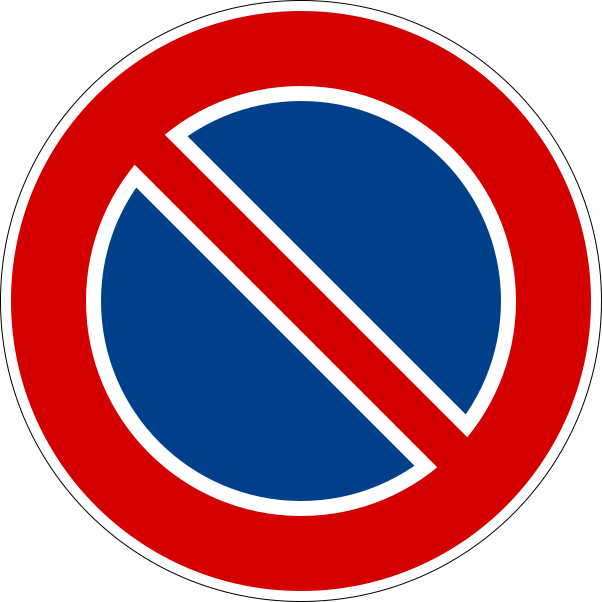
Divieto di Sosta
No Parking
Meaning
Vieta la sosta dei veicoli sul lato della carreggiata in cui è collocato il segnale. Consente la fermata breve. Può essere integrato con orari, giorni o categorie specifiche indicati su un pannello.
Bans parking on the side of the road where the sign stands. Short stops are permitted. It can be combined with times, days or specific vehicle categories shown on a supplementary panel.
Cosa Fare / What to Do
Non lasciare in sosta il veicolo. La fermata breve è consentita. Rispettare eventuali orari o deroghe indicate nel pannello integrativo.
Do not park the vehicle. Brief stops are permitted. Observe any times or exemptions shown on the supplementary panel.
Cosa Non Fare / What Not to Do
Non credere che vieti la fermata — vieta solo la sosta. Non credere che valga su entrambi i lati della strada — vale sul lato in cui è posto il segnale. Non credere che consenta la sosta ai residenti se non indicato.
Do not think it bans stopping — it only bans parking. Do not think it applies to both sides of the road — it applies to the side the sign stands on. Do not think it allows resident parking unless indicated.
Errore Comune / Common Mistake
Confonderlo con Divieto di Fermata (fig. 85) — la fermata è CONSENTITA con questo segnale. Credere che il divieto valga su entrambi i lati della carreggiata — FALSO: vale sul lato in cui il segnale è collocato; per vietarla su entrambi i lati occorre un segnale per lato.
Confusing it with No Stopping (fig. 85) — stopping IS allowed with this sign. Thinking the ban applies to both sides of the road — FALSE: it applies to the side the sign stands on; banning both sides requires a sign on each side.
Exam Tip
KEY DISTINCTION: No Parking = stopping allowed. No Stopping (fig. 85) = no stopping at all. Applies to the SIDE OF THE ROAD THE SIGN IS ON, not both sides. Resident or disabled exceptions apply only if explicitly shown on a supplementary panel.
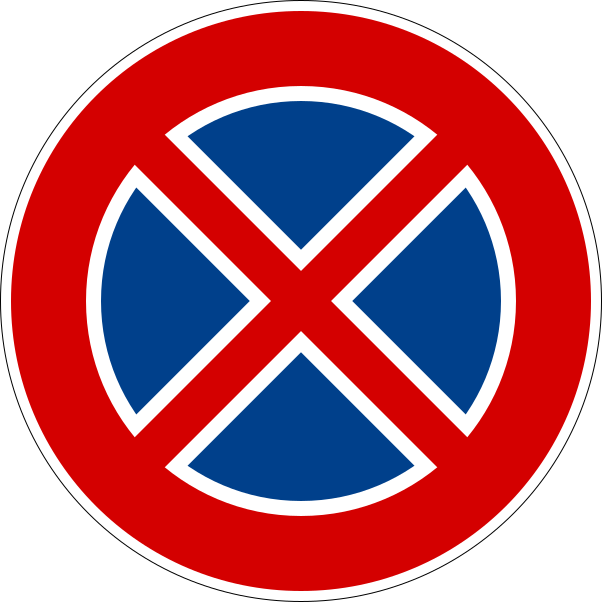
Divieto di Fermata
No Stopping
Meaning
Vieta qualsiasi fermata volontaria del veicolo. Più restrittivo del Divieto di Sosta: nemmeno la breve fermata è consentita. Se il veicolo viene fermato qui si procede alla rimozione coatta.
No stopping and no parking. Prohibits any voluntary halt of the vehicle, even momentarily. Stricter than Divieto di Sosta — you may not stop even briefly to drop off a passenger. If the vehicle is stopped here, it will be forcibly removed.
Cosa Fare / What to Do
Non fermarsi per nessun motivo — nemmeno per far salire o scendere passeggeri.
Do not stop for any reason — not even to pick up or drop off passengers.
Cosa Non Fare / What Not to Do
Non credere che la fermata per far salire/scendere passeggeri sia consentita — FALSO. Non confonderlo con il Divieto di Sosta (fig. 84) che consente la fermata.
Do not think stopping to pick up/drop off passengers is allowed — FALSE. Do not confuse it with No Parking (fig. 84) which does allow stops.
Errore Comune / Common Mistake
Credere che la fermata per scendere passeggeri sia consentita — FALSO. La rimozione coatta NON è sempre disposta automaticamente — avviene se il veicolo è fermo lì.
Thinking stopping to drop off passengers is allowed — FALSE. Towing is NOT always automatic — it happens when the vehicle is found stopped there.
Exam Tip
STRICTEST parking sign — no stopping at all, not even briefly. Picking up/dropping off passengers — FORBIDDEN. Towing may occur. Different from fig. 84 (No Parking) which allows stops.
2. Divieto di Sorpasso
Recognisable on sight — most countries post some version of it. What catches English speakers out is the detail: which vehicles the ban actually covers, which ones you may still overtake, and the fact that a truck counts as a motor vehicle even when the thing it's overtaking is a moped.
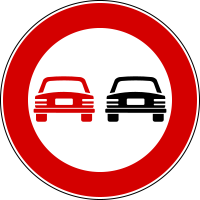
Divieto di Sorpasso
No Overtaking
Meaning
Vieta il sorpasso tra autoveicoli. Consentito sorpassare: motocicli, ciclomotori, biciclette, veicoli a trazione animale, veicoli a braccia, carrozze. Vietato anche se il sorpasso può avvenire entro la semicarreggiata. Può essere ripetuto dopo ogni incrocio con pannello integrativo.
Bans overtaking between motor vehicles. Allowed to overtake: motorcycles, mopeds, bicycles, animal-drawn vehicles, hand-drawn vehicles, carriages. Banned even if the manoeuvre stays within your half of the road. Can be repeated after each junction with a supplementary panel.
Cosa Fare / What to Do
Non sorpassare autoveicoli. Si possono sorpassare motocicli, ciclomotori, biciclette e veicoli non a motore.
Do not overtake motor vehicles. You may overtake motorcycles, mopeds, bicycles and non-motorised vehicles.
Cosa Non Fare / What Not to Do
Non credere che vieti qualsiasi sorpasso — solo tra autoveicoli. Non credere che vieti il transito agli autotreni. Non credere che un autocarro possa sorpassare un motociclo — FALSO (autocarro = autoveicolo). Non credere che si trovi solo su strade extraurbane.
Do not think it bans all overtaking — only between motor vehicles. Do not think it bans transit for truck trains. Do not think a truck can overtake a motorcycle — FALSE (truck = motor vehicle). Do not think it only appears on extra-urban roads.
Errore Comune / Common Mistake
Credere che un autocarro possa sorpassare un motociclo — FALSO, l'autocarro è un autoveicolo. Credere di poter sorpassare un autoveicolo purché non si superi la striscia continua — FALSO: il segnale vieta la manovra in sé, non solo l'attraversamento della linea. Credere che vieti il transito.
Thinking a truck can overtake a motorcycle — FALSE, a truck IS a motor vehicle. Thinking you may overtake a motor vehicle as long as you don't cross the centre line — FALSE: the sign bans the manoeuvre itself, not merely crossing the line. Thinking it bans transit.
Exam Tip
KEY: trucks overtaking motorcycles = FORBIDDEN (both are motor vehicles). Mopeds, motorcycles and bicycles = CAN be overtaken. Electric cars = CANNOT be overtaken (they ARE motor vehicles). Overtaking a car within your own lane = still FORBIDDEN — the sign bans the manoeuvre, not just crossing the line. Even a permitted overtake must be completed without crossing a continuous line.
3. Dare la Precedenza
The triangle is familiar; what it demands is broader than most people assume. This sign doesn't ask you to watch the right-hand side — it requires you to give way to everything on the intersecting road, from both directions. And it doesn't always mean stop: if you slow down and the road is genuinely clear, you don't have to come to a halt. Two details, both examined, both routinely got wrong.
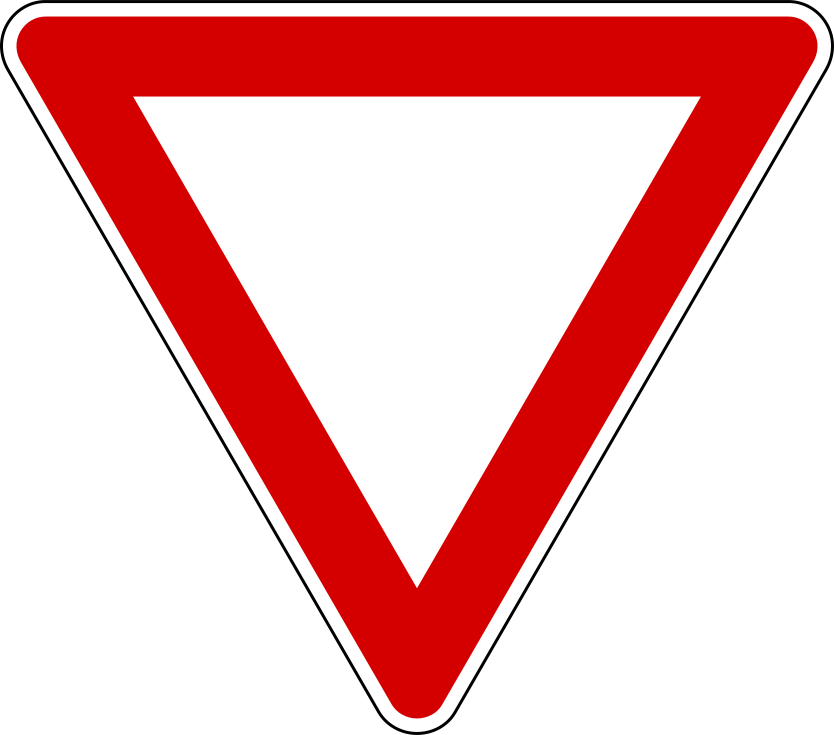
Dare Precedenza
Give Way
Meaning
Obbliga a dare la precedenza ai veicoli che circolano sulla strada che si incrocia, sia da destra che da sinistra. Posto su strade secondarie prive del diritto di precedenza. Su strade extraurbane è preceduto dal segnale di Preavviso di Dare Precedenza. Si trova anche sulle corsie di accelerazione per l'immissione in autostrada. Se abbinato a semaforo a luce gialla lampeggiante, la precedenza vale anche con il semaforo in quella modalità.
Requires giving way to vehicles on the intersecting road, from both right and left. Placed on secondary roads without priority. On extra-urban roads it is preceded by the Advance Give Way sign. Also found on acceleration lanes for motorway entry. When combined with a flashing yellow traffic light, the obligation still applies.
Cosa Fare / What to Do
Rallentare e, se necessario, fermarsi per dare la precedenza. Se rallentando si vede chiaramente che non arrivano veicoli né da destra né da sinistra, non è necessario fermarsi completamente. Dare la precedenza a TUTTI i veicoli dalla strada che si incrocia.
Slow down and if necessary stop to give way. If by slowing down you can clearly see no vehicles are coming from either direction, stopping completely is not required. Give way to ALL vehicles on the intersecting road.
Cosa Non Fare / What Not to Do
Non credere di dover fermarsi obbligatoriamente se la visibilità è libera. Non credere che la precedenza valga solo a destra. Non credere che questo segnale possa essere preceduto dal preavviso di STOP — è il contrario. Non credere che si trovi solo su strade extraurbane.
Do not think stopping is compulsory even when visibility is clear. Do not think priority only applies from the right. Do not think this sign can be preceded by a STOP advance sign — it's the other way around. Do not think it only appears on extra-urban roads.
Errore Comune / Common Mistake
Credere che sia obbligatorio fermarsi sempre — FALSO, se la visibilità è libera basta rallentare. Credere che valga solo per veicoli da destra — FALSO, da destra e sinistra. Credere che possa essere preceduto dal preavviso di STOP — FALSO.
Thinking you must always stop — FALSE, if visibility is clear, slowing down is enough. Thinking it only applies to vehicles from the right — FALSE, from both directions. Thinking it can be preceded by the STOP advance sign — FALSE.
Exam Tip
KEY TRUE: not always mandatory to stop — only if visibility unclear. KEY FALSE: preceded by Stop advance sign (FALSE — preceded by Give Way advance sign). Motorway acceleration lanes — TRUE. With flashing yellow light — priority still applies (TRUE).
4. Strada con Diritto di Precedenza
The reassuring one, and the one people over-trust. It confirms the road you're on has priority over the roads joining it — which is genuinely useful, right up until something cancels it. Knowing what cancels it is worth as much as knowing what it grants.
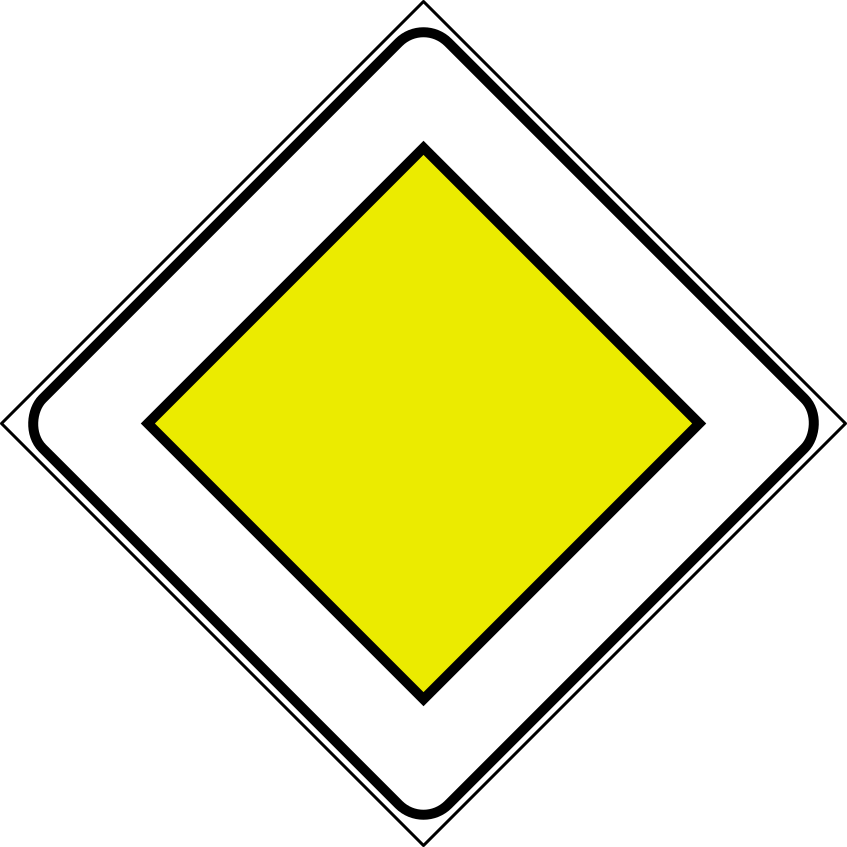
Strada con Diritto di Precedenza
Priority Road
Meaning
Indica l'inizio di una strada che gode del diritto di precedenza su tutte le strade che vi si incrociano. Sulle strade che si incrociano sarà presente il segnale Dare Precedenza o STOP. Può essere posto su strade urbane o extraurbane, anche strade statali. Può essere ripetuto in formato piccolo prima e dopo ogni incrocio. Non impone di non moderare la velocità.
Marks the beginning of a road that has right of way over all intersecting roads. Intersecting roads will have a Give Way or Stop sign. Can be placed on urban or extra-urban roads, including state roads. Can be repeated in small format before and after each junction. Does not mean you should not moderate speed.
Cosa Fare / What to Do
Procedere con la precedenza sulle strade che si incrociano. Moderare comunque la velocità agli incroci per sicurezza. Assicurarsi che i veicoli provenienti dalle strade laterali diano effettivamente la precedenza.
Proceed with priority over intersecting roads. Still moderate speed at junctions for safety. Ensure vehicles from side roads actually give way.
Cosa Non Fare / What Not to Do
Non credere di non dover rallentare agli incroci perché si ha la precedenza. Non credere che si trovi solo su strade extraurbane. Non credere che si trovi all'inizio di un'autostrada. Non credere che si trovi alla fine di una strada con precedenza.
Do not think you don't need to slow at junctions because you have priority. Do not think it only appears on extra-urban roads. Do not think it appears at the start of a motorway. Do not think it appears at the end of a priority road.
Errore Comune / Common Mistake
Credere di poter ignorare la velocità agli incroci — FALSO, moderare sempre. Credere che si trovi alla fine della strada con precedenza — FALSO, è all'INIZIO. Credere che valga solo fino all'uscita del centro abitato — FALSO.
Thinking you can ignore speed at junctions — FALSE, always moderate. Thinking it appears at the END of the priority road — FALSE, it is at the START. Thinking it only applies until leaving the built-up area — FALSE.
Exam Tip
Marks the START (not end) of priority road. Can be on state roads — TRUE. Can be repeated before/after junctions in small format — TRUE. Still moderate speed at junctions — TRUE. Only until leaving town = FALSE.
5. Pannelli Integrativi
A small plate under the main sign carrying a distance, a duration, a vehicle class, a time window or an exception. What makes them hard isn't that they're unfamiliar — it's that the same panel means different things depending on what it's fixed beneath. A distance panel under a danger sign and the same panel under a prohibition sign are telling you two different things. The exam tests this relentlessly, because it's where confident learners get careless.
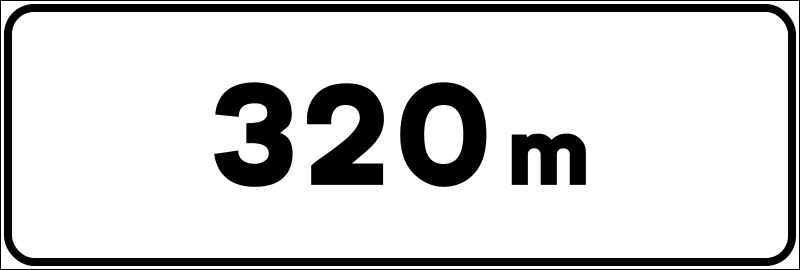
Pannello di Distanza
Distance Panel
Meaning
Pannello rettangolare posto sotto un segnale principale. Significato dipende dal segnale abbinato: sotto un segnale di PERICOLO = distanza tra il segnale e il punto d'inizio del pericolo (es. 150m). Sotto un segnale di OBBLIGO o DIVIETO = distanza dalla quale inizia la prescrizione. Sotto un segnale di INDICAZIONE = distanza che manca per raggiungere il punto indicato. NON indica i metri di strada già percorsi. NON obbliga a proseguire dritto per la distanza indicata.
Rectangular panel placed below a main sign. Meaning depends on the paired sign: below a DANGER sign = distance between the sign and the start of the hazard (e.g. 150m). Below an OBLIGATION or PROHIBITION = distance from which the prescription starts. Below an INFORMATION sign = distance remaining to reach the indicated point. Does NOT indicate metres already travelled. Does NOT oblige going straight for the indicated distance.
Cosa Fare / What to Do
Interpretare la distanza in base al segnale a cui è abbinato. Pericolo = hazard inizio a Xm. Obbligo/divieto = prescrizione inizia a Xm. Indicazione = punto indicato a Xm.
Interpret the distance based on the paired sign. Danger = hazard starts at Xm. Obligation/prohibition = prescription starts at Xm. Information = indicated point is Xm away.
Cosa Non Fare / What Not to Do
Non credere che indichi i metri già percorsi — FALSO. Non credere che obblighi a proseguire dritto per la distanza — FALSO.
Do not think it shows metres already travelled — FALSE. Do not think it obliges going straight for the distance — FALSE.
Errore Comune / Common Mistake
Credere che indichi i metri già percorsi — FALSO. Credere che obblighi a proseguire dritto per 380m (es.) — FALSO. Il significato dipende dal segnale abbinato.
Thinking it shows metres already travelled — FALSE. Thinking it obliges going straight for 380m (e.g.) — FALSE. Meaning depends on the paired sign.
Exam Tip
Meaning DEPENDS on paired sign: danger=hazard start distance, prohibition=prescription start distance, information=distance to destination. Metres already travelled — FALSE. Compulsory straight for that distance — FALSE.
Frequently asked questions
Are Italian road signs written in English?
No. Italian road signs use Italian text only. The Patente B theory exam is available in a small number of languages, and English is not one of them.
Do I have to take the Italian driving theory exam in Italian?
In practice, yes. The exam is 30 questions in 30 minutes, with a maximum of three wrong answers. Alongside Italian it is also offered in German and French — provisions that exist for Italy's recognised linguistic minorities in the regions bordering Austria and France, not options an applicant can simply request. English is not among them, which is why almost every English-speaking resident sits the exam in Italian.
How many road signs do I need to know?
The signs that appear in the official theory question bank span all eleven categories. Patente Parallel covers 227 of them, each with the Italian name, the English meaning, what to do, what not to do, the common mistake, and an exam tip.
What's the difference between divieto di sosta and divieto di fermata?
They are two different prohibitions, not two words for the same one — one concerns parking, the other concerns stopping at all. The distinction is examined and it's a common source of both exam errors and real-world fines. See section 1 above for both signs in full.
Can I convert my US driving licence to an Italian one?
No. The United States has no licence-exchange agreement with Italy, so American drivers (unlike UK licence holders) must obtain an Italian Patente B from scratch — including the full theory exam. We cover what that involves in Can You Exchange a US or UK Licence in Italy?
Start studying now
The six above are a sample. Patente Parallel's signs module covers 227 Italian road signs, each one checked against an Italian theory textbook — with the official Italian name, the English meaning, what to do, what not to do, the mistake most learners make, and how the exam tends to test it.
And the signs are one part of it.
Full Pass — €29.99
- 1,000+ questions and diagrams across 25 chapters, every one side by side in Italian and English
- 227 road signs, dual-language, verified against an Italian theory textbook
- The incroci module — the official ministerial junction diagrams, quizzed on right-of-way order
- Exam simulation — 30 questions, 30 minutes, three errors allowed, exactly like the real thing
- Chapter introductions that actually teach — the theory behind the questions, not just the questions
One payment. No subscription, no renewals, no expiry date. Yours forever.
Not ready to commit? Chapter 1 is free — 80 questions, no signup required.